





la-

TAKE ME AWAY A love letter to Mariah Carey

In this Article

Share

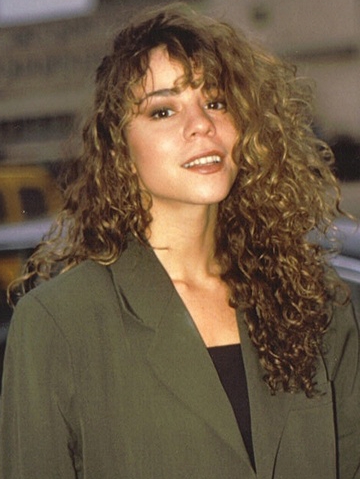
I love Mariah Carey the way Mariah Carey loves Marilyn Monroe. Our love is born at the nexus of impossibility and identification. I wasn’t always sure what kind of love this was. It was not sexual or romantic, nor did I want to be like her. What I wanted, and still want, was proximity to the limitlessness of the world she had forged: I loved the key turning, the door creaking, the window flying open. I loved
the secret place she made for me, for us.

© Public domain

Chapter I

Mariah sometimes describes her love for Marilyn as both an identification (curvy, feminine, “surprisingly” bookish, from a working-class background, brunette) and a fantasy (glamorous, elegant, sensual, powerful, a successful actress, a shiny thing, blonde) and sometimes both (Was she black? She never knew her dad, after all, and what about that triple-processed hair and the shape of her lips and ass?). In Dark Designs and Visual Culture, Michele Wallace observes this particular phenomenon:

It was always said among black women that Joan Crawford was black, and as I watch these films again today, looking at Rita Hayworth in Gilda or Lana Turner in The Postman Always Rings Twice, I keep thinking “she’s so beautiful, she looks black.” Such a statement makes no sense in current feminist film criticism. What I am trying to suggest is that there was a way in which these films were possessed by black female viewers. The process may have been about making problematic and expanding one’s racial identity instead of abandoning it . . . Disparate factions in the audience, not all equally well indoctrinated in the dominant discourse, may have their own way, now and then, with interpretation.

© Public domain

Chapter II

Perhaps the possibility of Marilyn’s blackness indexed both a desire and a claim. Perhaps it refashioned Marilyn, and perhaps it refashioned the little black girl Mariah Carey once was—the little black girl she was trying to be, the little black girl she was trying not to be. Mariah marked Marilyn; Marilyn marked her back. And Mariah marked me. In the ’90s, we all knew Mariah Carey was black even if the mainstream media had not caught up. Even if the record labels tried desperately to suppress it. But black people knew. I read Mariah the way she had perhaps read Marilyn, but rather than send myself up to Mariah, as she had done with Marilyn – imagining herself one day as the diamond-encrusted blonde vixen she would eventually become – I instead sent Mariah down to me. I read at the roots and ends of her shiny golden-blonde hair, I plumbed the dusky metallic undertone of her flat beige complexion, I looked deep into her eyes (as Irene says, “Ah! Surely! They were Negro eyes!” in Nella Larsen’s Passing), but above all I listened to her sound, to the crackling edges of her whistle-clean voice. I did not hope to one day be like her; I instead told myself that she was already like me.

Chapter III

What José Muñoz calls disidentification might describe this way of reading at the edges – these torn edges where the black substrate (to riff on Nathaniel Mackey) pierces through the white surface from below. A reading of and for blackness that likewise blackens its object – reading as an act of marking, an ongoing inscription against and alongside the text. It may be annotation, but it may also be the marking of possession, as Wallace puts it, of claiming. Where there is dissonance between reader and text, it is in these gaps that we attend to the fugitive meaning and excess signification that collects in corners and at edges, that accumulates and crusts over.

© Public domain

Chapter IV

This residual profusion imparts new meaning to the object and brings it differently into relief. “The disidentificatory optic” Muñoz describes “is turned to shadows and fissures within the text,” but it is also tuned to them – it not only sees presence in negative space but hears sound in silence, and can distinguish among various tones of silence: a caesura, a breeze, a held breath, a delicious quiet between lovers, the anxious aching still of a phone call that never arrives. Credit to her incredible five-octave vocal range, sometimes Mariah’s sound exceeds sound. Her B7 whistle register escapes into a silence, a sound that only certain nonhuman life-forms can hear, a sound that hails the extraterrestrial, no, the celestial. Sound that dissolves the border between secular and sacred tones. We know when we hear her that there is, if not a heaven, at least another realm, another layer, a suspended paradise of honey, rainbows, cumulus clouds – simple signs from a cast-off iconography.

Credit to her incredible five-octave vocal range, sometimes Mariah’s sound exceeds sound. Her B7 whistle register escapes into a silence, a sound that only certain nonhuman life-forms can hear, a sound that hails the extraterrestrial, no, the celestial. Sound that dissolves the border between secular and sacred tones.

© Public Domain

Chapter V

love Mariah the way Mariah loves Marilyn. Only I didn’t have posters of her, like other young fans. I didn’t have posters of anyone. I lived in a room that always looked like it was maybe underwater or in a vault or in a basement. What I did have: an altar, a bowl of hair and cascarilla, a jar of honey filled with notes, a model human skeleton inside a glass dome, a life-size black Barbie with a lovelessly given uneven lob and nail polish for lipstick, large triangles of hand-painted wood, half-filled sketchbooks (more than twenty), half-filled marble composition notebooks (more than ten), books (more than a hundred), and stray papers (thousands). I was a child allowed to make the things around me, and to keep them too. I was a child encouraged to keep everything because “you never know what will happen.” It was both a threat and a promise. It was an invitation to think rigorously and often about the future, to be driven to create by both intense fantasy and intense fear.

© Public Domain

Chapter VI

Last spring, I visited Lauren Halsey’s installation we still here, there at MOCA in Los Angeles. we still here, there might be described as a room, or better yet a cavern, a grotto, an outcropping, a shrine to the priceless detritus of black life in post-Watts Los Angeles. She weaves together metahistories of the Great Migration, the Watts Rebellion, and the Black Arts Movement with personal memories, childhood bedrooms, your grandma’s house, and the everyday.

Halsey combines the artificial and manufactured with languages of the organic, placing geological, almost glacial, rock formations and streaming water alongside Technicolor hair weaves, acrylic nails, patterned carpets, dollhouses, scattered tchotchkes and charms of black kitsch – fluorescent plastic pyramids, black ballerinas, bedazzled ankhs. Nestled among fake flowers and flourishes of glitter, these collected objects, which in another context might be understood as junk or scrap, are elevated to the status of precious stones, sprouting from the nooks and crannies of the grotto walls as if untouched and unmined. I think of Maud Martha’s dandelions: “yellow jewels for every day.”

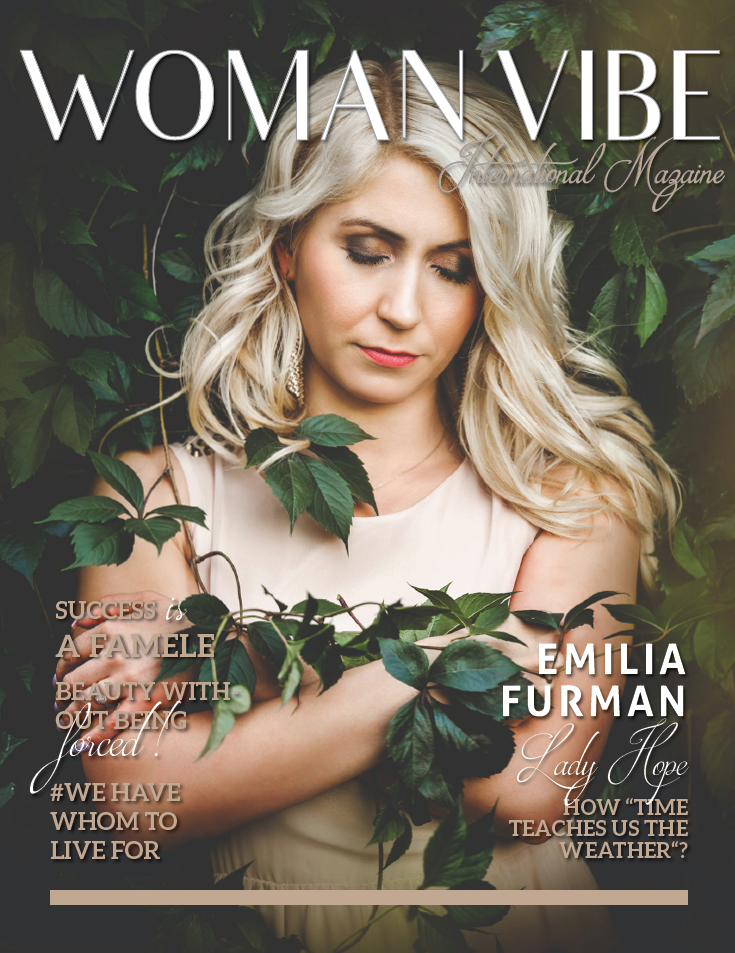
Article Source: Woman Vibe Magazine

Editor In Chief: Klaudiusz Wiśniewski


You can read the entire article in the first issue of WVM

Read more at 1 issue WVM International

Recommended from Shop

A clean learning space will help facilitate your kids’ learning abilities. Following these methods will certainly help make your kid’s learning space better and cleaner.

Pin to board
Share on facebook

Dodaj komentarz

Twój adres e-mail nie zostanie opublikowany. Wymagane pola są oznaczone *

Next Articles

instagram: